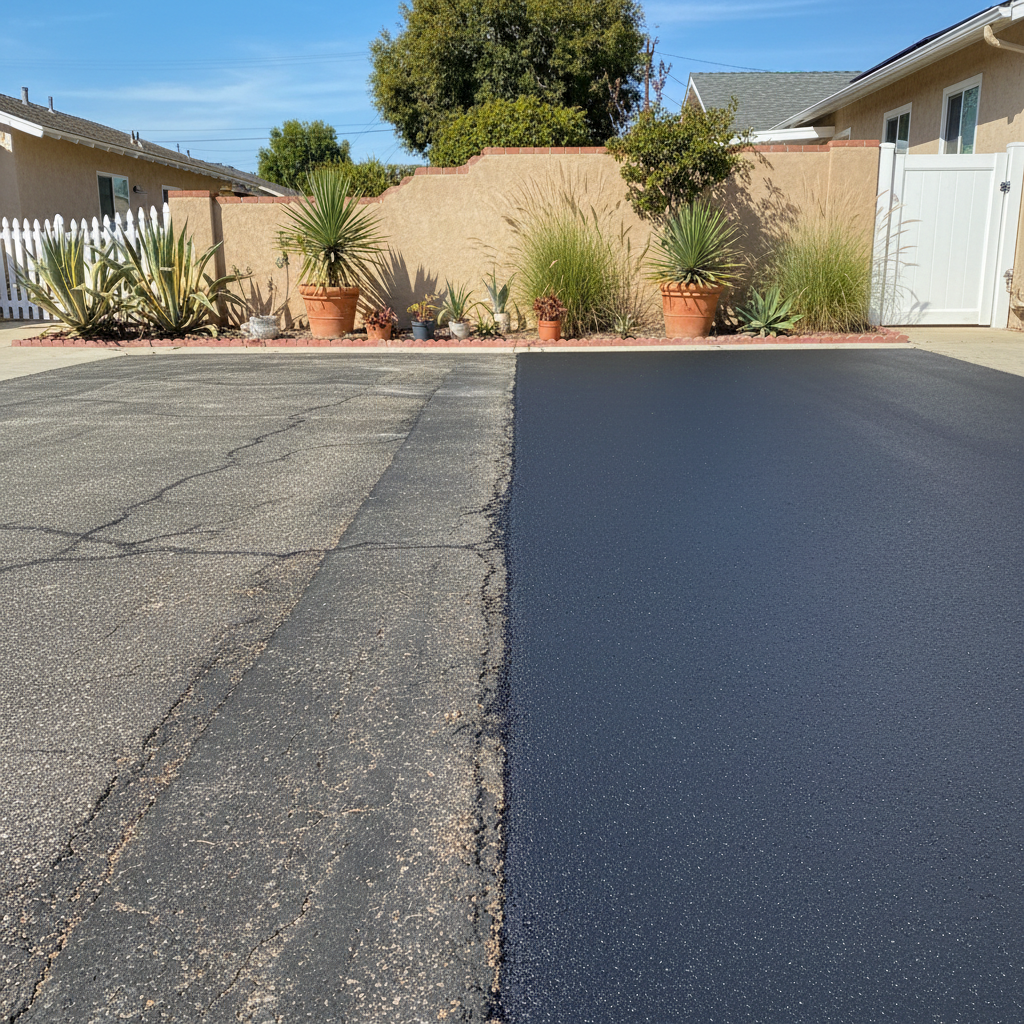
Your driveway takes a beating, doesn't it? Especially with our sunny Westminster weather and those occasional heavy rains. Eventually, you'll look out there and think, 'Yep, it's time.' When that moment hits, you're usually looking at two main options for your asphalt: an overlay or a full replacement. I've seen countless driveways handled both ways, and each has its place, believe me. Knowing which one is right for your situation can save you a ton of headaches and, more importantly, a lot of cash.
Asphalt Overlay: Just Resurfacing It
An asphalt overlay is pretty straightforward. We're essentially putting a brand-new layer of asphalt right on top of your existing one. Think of it like a fresh coat of paint, but for your driveway. We don't tear anything out; we just add to what's already there. This is a fantastic option if your current driveway's foundation is still solid. What do I mean by solid? I'm talking about the base layer underneath the asphalt itself. If that's stable, and you're mostly dealing with surface cracks, some minor potholes, or just a faded, worn-out look, an overlay can be a real winner.
Here's the lowdown on overlays:
- Cost: This is usually the big appeal. An overlay is much cheaper than a full replacement because we skip all that demolition and hauling away old material. Less labor, less material – you get the picture.
- Speed: It's a quicker job, no doubt about it. We can get in and out faster, which means less disruption for you and your family.
- Durability: You'll get a good 8-15 years of fresh, smooth surface from an overlay. That depends on how much traffic it sees, how well you maintain it, and how sturdy the original base was. It won't last as long as a brand-new, full-depth driveway, but it's still a solid run.
- Appearance: You get that beautiful, brand-new, dark black look. It covers up all those ugly cracks and patches, making your property look sharp again.
- Maintenance: Just like any asphalt, you'll want to sealcoat it every few years. That protects it from the sun and other elements, extending its life.
The catch, though? If your driveway has major structural issues – I'm talking deep, widespread alligator cracking, significant sinking, or drainage problems – an overlay is just putting a band-aid on a broken leg. It won't fix the underlying problem, and those issues will eventually show right through the new layer.
Full Depth Asphalt Replacement: The Whole Shebang
A full replacement means we're tearing out everything, right down to the dirt. We remove all the old asphalt, and sometimes even the old base material, then rebuild from the ground up. This involves grading the sub-base, laying down a fresh aggregate base, and then paving with new asphalt. This is the route you need to take if your driveway is truly falling apart. If you've got standing water after a rain, huge potholes, or sections that have sunk significantly, you're probably looking at a full replacement.
What you get with a full replacement:
- Cost: It's more expensive, plain and simple. All that demolition, hauling, and rebuilding really adds up.
- Speed: It takes longer. More steps, more equipment, more time on site.
- Durability: This is where it really shines. A properly installed full replacement can last 20-30 years, sometimes even longer, especially if you keep up with sealcoating. You're getting a brand-new foundation, after all.
- Appearance: Flawless. It's a completely new surface, perfectly graded, with no "ghosts" of old cracks showing through.
- Maintenance: Same as an overlay – sealcoating is still key. But because the foundation is new and strong, it's less likely to develop major issues quickly.
The main reason people hesitate with a full replacement is the cost, but sometimes, honestly, it's the only real solution. Trying to overlay a driveway with a failing base is just throwing good money after bad. Who wants to do that?
Which One For Your Westminster Home?
Here's my honest take. For many homes around Westminster, especially in older neighborhoods like those near Bolsa Chica Park where the ground might have settled over decades, you really need to assess the base. If you've got a few minor cracks and the surface just looks tired, an overlay is a fantastic, cost-effective solution. It'll give you that curb appeal back without breaking the bank.
However, if you're seeing significant dips, standing water, or cracks that look like an alligator's hide, don't mess around. You've got a structural problem, and an overlay won't fix it. You'll end up paying for an overlay only to have it fail prematurely, and then you'll have to pay for a full replacement anyway. That's double the cost, and nobody wants that, right?
My recommendation? Get a professional opinion. Western Paving can come out, take a look at your driveway, and tell you straight up what we think is the best course of action. We'll check the drainage, the base, and the extent of the damage. We'll give you an honest assessment and a clear quote for both options, if applicable. Don't guess; let us help you make the smart choice for your home and your wallet.